Dear fellow mainframer,
I suspect my colleague Armin actually hates all the “mainframe modernization” hype, the latest fashion statement for the summer of 2026.
He’s always quick to remind me that modernization isn’t a project. It’s a set of daily actions. Every single week, Monday through Friday.
That’s why, in this issue, we’re bringing you two very different mainframe stories. One, from the Philippines, dives into true hard-core, hands-on modernization. The other explores Project Polaris, a strategic IBM initiative aimed at declunkifying the mainframe experience.
Because the mainframe is no longer just the heavy-duty machine it used to be for decades.
Today, it has many faces and can take on a wide range of roles in the digital playground. And modernization, in reality, is mostly about transformation. It’s about adapting to those new roles.
Some film stars in Hollywood play the same character in every movie. But the truly great actors can reinvent themselves completely from one role to the next.
That’s the mainframe today.
Modernization done right
From legacy to resilient
Core banking isn’t a sandbox.
You don’t walk in with a “move fast and break things” mindset and hope for the best. That’s why this story matters.
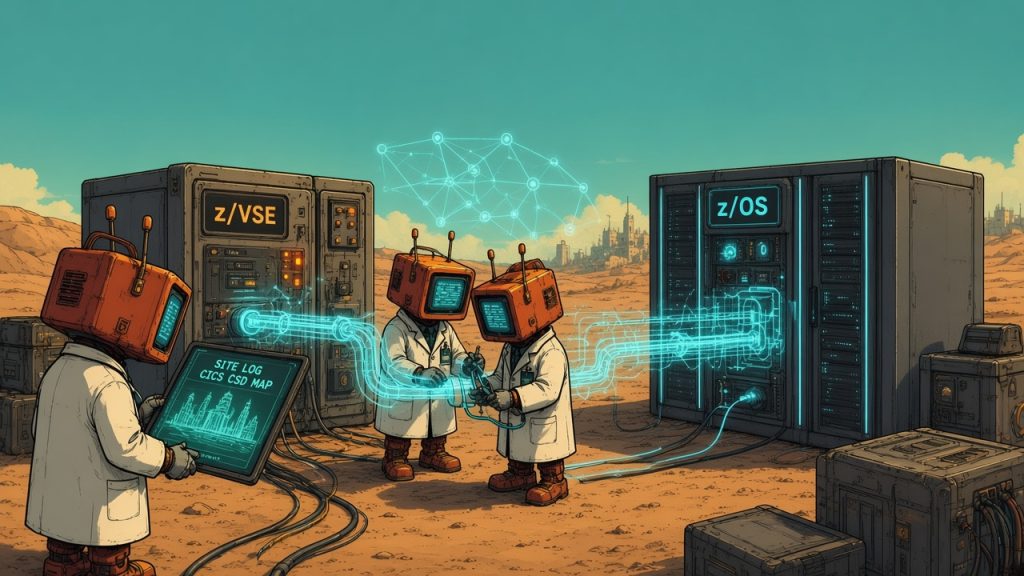
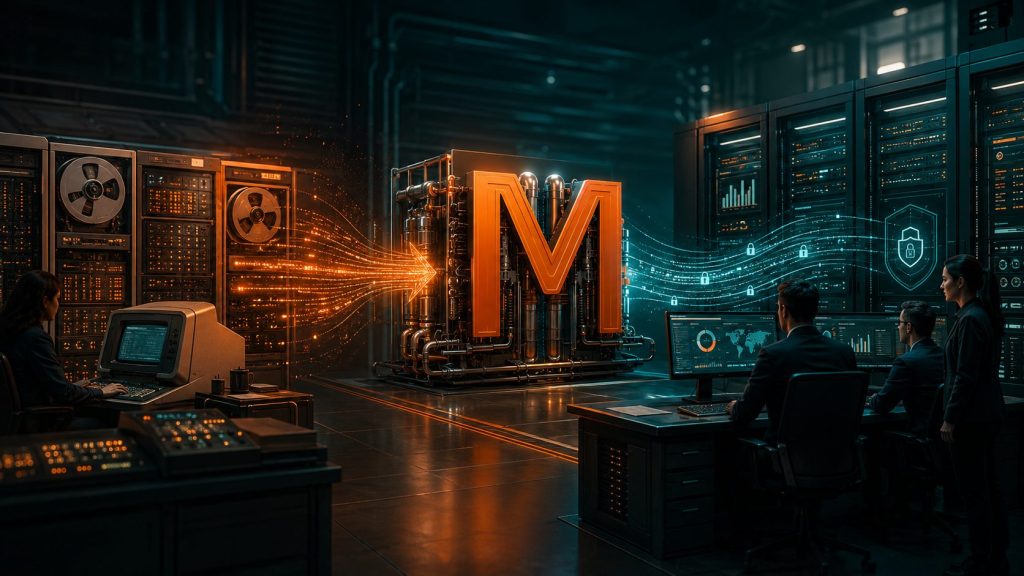
Philippine National Bank (PNB) modernized its core banking environment, migrating from z/VSE to z/OS on IBM z16. The project was delivered jointly by IBM and CROZ.
Not because modernization looks good on a strategy deck, but because resilience, continuity, security, and performance matter every single day.
The project covered an end-to-end setup of the new z/OS environment, from the foundational IBM z16 hardware configuration to the installation and tuning of the operating system across multiple target LPARs.
As part of the modernization, PNB replaced its legacy network configuration with z/OS TCP/IP. The bank’s security architecture was migrated to IBM RACF and now includes AT-TLS to support end-to-end encryption of all network communication.
How the teams approached the migration, kept daily banking operations running, and built a stronger foundation for the future—read the full story here.
Following the North Star
What’s next for z/OS?
Once you know your way around z/OS, many things start to feel natural. The commands, the panels, the shortcuts, the little habits that turn into muscle memory.
Project Polaris is part of a broader effort IBM calls z/OS Simplification. It’s built around three core ideas: making the platform easier for newcomers, aligning with tools and conventions used across the rest of the industry, and removing historical differences that add friction without delivering real value.
We were happy to host Fiona King, z/OS Product Manager at IBM, and Tim Reiser, Senior Design Lead, at the Mighty Mainframe Conference. They shared where the platform is heading, the North Star, and how they plan to get there.
Read the full story by Antonio Gibas, a new blog writer from CROZ here.
Industry insights
Marin Sabo is writing a research paper on the mainframe skills gap at the Faculty of Electrical Engineering, Computer Science and Information Technology in Osijek.
Here’s what he found about the age of mainframe engineers.
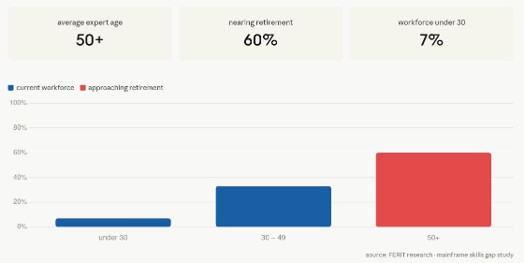
Marin asks an interesting question: who will be using mainframes in 10 years?
He’s also skeptical about the current trend of trying to attract everyone by lowering the barrier and making mainframes more approachable.
In his view, the mainframe was never meant for everyone. It was built for engineers willing to commit to mastery, deep work, and long-term thinking.
Treating it like just another trendy framework isn’t a talent strategy. It risks diluting the craft. Instead, Marin suggests we should focus on identifying talented engineers and motivating them to stay on the platform.
What do you think?
Personally, I think he’s only partially right. Join the conversation click here.

Falls Sie Fragen haben, sind wir nur einen Klick entfernt.