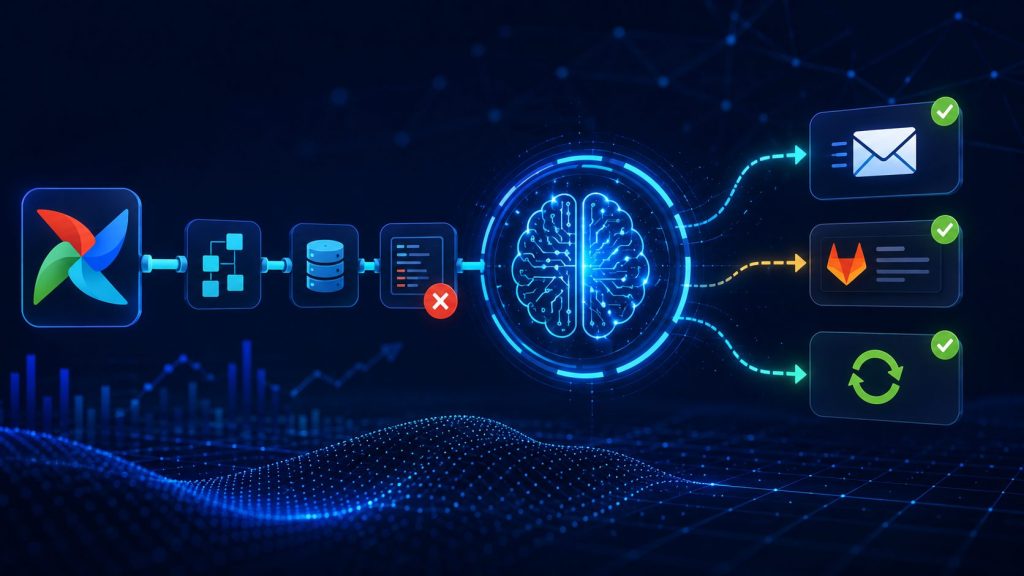
Machine Identity Lifecycle Management is becoming a core security and reliability practice for modern IT teams. As applications, APIs, cloud services, containers, and devices constantly authenticate to each other, organizations need a structured way to manage the digital identities used by machines. At its core, this depends on effective Certificate Lifecycle Management to keep TLS certificates and other machine identities secure, trusted, and continuously available.
I’ve been a System Engineer for more than 20 years now. I’ve been responsible for monitoring IT systems and have witnessed numerous services fail, spending countless nights trying to get them back online. The two most common causes of service outages I’ve encountered are:
- Disk space
- Expired certificates
I rarely encounter disk space issues nowadays. For many teams, the bigger challenge is Certificate Lifecycle Management. Expired, misconfigured, or unmanaged TLS certificates can break websites, APIs, internal applications, and other critical business services.
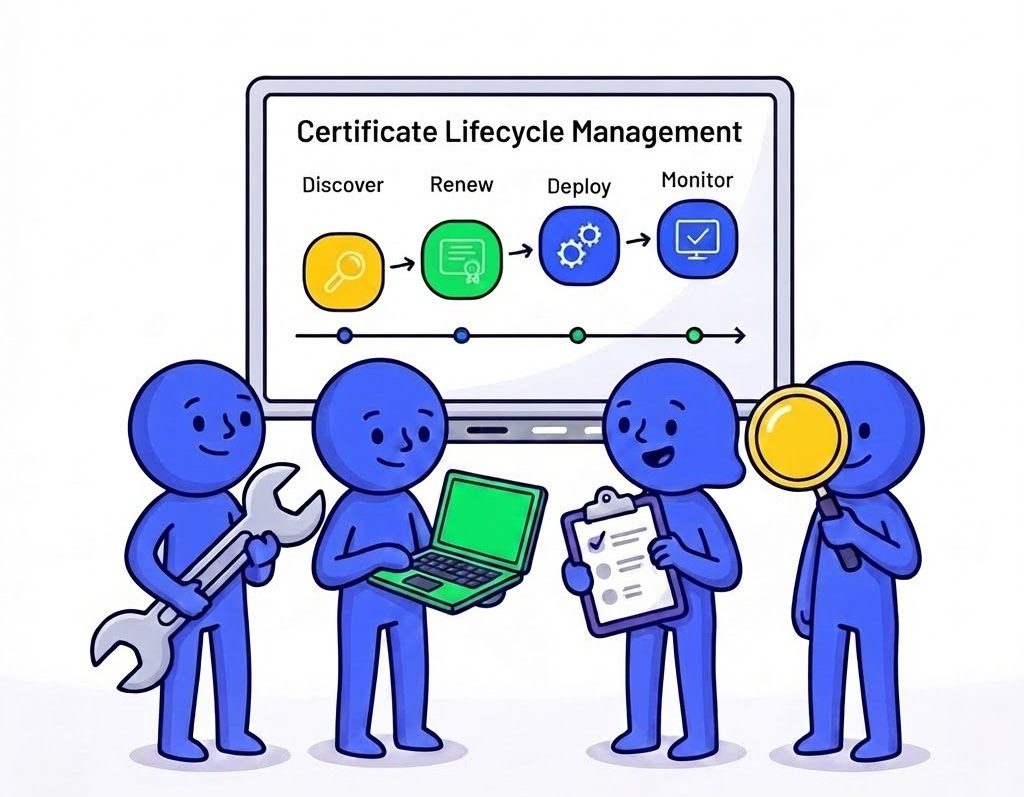
This matters even more as public TLS certificate lifetimes continue to shrink. Google and other browser ecosystem stakeholders have pushed the industry toward shorter certificate validity periods. According to the CA/Browser Forum timeline, public TLS certificates will have a maximum validity of 100 days in 2027 and 47 days in 2029.
What Is Machine Identity Lifecycle Management?
Machine Identity Lifecycle Management is the process of managing the digital identities used by machines, systems, applications, workloads, and services. It extends traditional Certificate Lifecycle Management by governing the complete lifecycle of certificates, keys, and other cryptographic credentials.
A machine identity is a credential that allows a non-human entity to prove that it is trusted. These identities are usually based on cryptographic materials such as:
- TLS certificates
- Private keys
- SSH keys
- Code-signing certificates
- API credentials
Examples of machine identities include:
- A web server using a TLS certificate for HTTPS
- A microservice authenticating to another service
- An AI agent authenticating to systems it needs to access
- A Kubernetes workload using a certificate in a service mesh
- A CI/CD pipeline signing software artifacts
- A firewall, router, or load balancer proving its identity
- An internal API using mutual TLS for secure communication
The goal of Machine Identity Lifecycle Management is to control these identities from creation to retirement through consistent governance, automation, and Certificate Lifecycle Management.
That lifecycle usually includes:
- Discovering machine identities across the environment
- Assigning ownership to certificates and keys
- Issuing credentials through approved processes
- Deploying them to the correct systems
- Monitoring expiration, usage, and compliance
- Renewing and rotating them before they fail
- Revoking them when they are compromised or no longer needed
In simple terms, Machine Identity Lifecycle Management answers three critical questions:
- What machine identities do we have?
- Who owns them?
- Are they secure, valid, and properly managed?
Why Machine Identities Matter for IT Security
Machine identities are often invisible until something goes wrong.
When a human password expires, one user may be locked out. When a TLS certificate expires, an entire service can become unavailable. A single certificate issue can disrupt customers, partners, internal users, payment systems, APIs, or production applications.
Without effective Certificate Lifecycle Management, organizations often lose visibility into their certificates and cryptographic assets, increasing both security and operational risk.
Unmanaged machine identities create several risks:
- Outages caused by expired TLS certificates
- Security gaps caused by weak or outdated cryptography
- Impersonation if private keys are stolen or misused
- Compliance issues when certificates do not follow policy
- Operational delays when teams do not know who owns a certificate
- Incident response challenges when compromised certificates cannot be located quickly
This is why machine identity is both a security issue and an availability issue.
Modern infrastructure depends on machine-to-machine communication. If that trust is not visible and controlled, IT teams are managing critical risk blindly.
What Good Machine Identity Lifecycle Management Looks Like
A mature Machine Identity Lifecycle Management program combines visibility, automation, and Certificate Lifecycle Management to give IT, security, and platform teams shared control over machine identities.
In practice, this means:
- Security teams define certificate and key policies centrally
- IT teams identify certificate risks before they cause outages
- DevOps teams request and deploy certificates through approved workflows
- Application owners remain accountable for their machine identities
- Renewals happen automatically wherever possible
- Exceptions are visible and properly managed
- Revocation and replacement are fast during security incidents
Conclusion: Machine Identity Lifecycle Management Is Now Essential
Machine Identity Lifecycle Management is essential for building secure and reliable digital infrastructure.
The key benefits include:
- Preventing service outages
- Improving security
- Supporting compliance
- Enabling automation
TLS certificates are among the most important machine identities, making Certificate Lifecycle Management a critical capability for every modern IT organization. Certificate management can no longer depend on spreadsheets, manual renewals, or the knowledge of one colleague who happens to remember renewal dates.
The essential steps are straightforward:
- Discover certificates
- Assign ownership
- Enforce policies
- Automate renewals
- Validate deployments
- Prepare for rapid certificate revocation
The future of Certificate Lifecycle Management is automated, policy-driven, and continuous. Organizations that invest in modern certificate management and Machine Identity Lifecycle Management will reduce outages, strengthen security, and be ready for the next generation of digital infrastructure.
Good Machine Identity Lifecycle Management does not slow teams down.
It gives them safe, repeatable, and scalable processes.
And that is exactly what modern IT needs.

Falls Sie Fragen haben, sind wir nur einen Klick entfernt.