
Building an application is one thing. Releasing it alongside several others, with dependencies, shared deployment windows, and multiple teams involved, is quite another. Mainframe releases need more than an application that is ready to go.
IBM’s latest updates to IBM Dependency Based Build for z/OS (DBB) and IBM Wazi Deploy 4.0 tackle both sides of that challenge: understanding dependencies during the build and coordinating applications when it’s time to release. Because “my application is ready” does not always mean “the release is ready.”
Meet Your Release Conductor
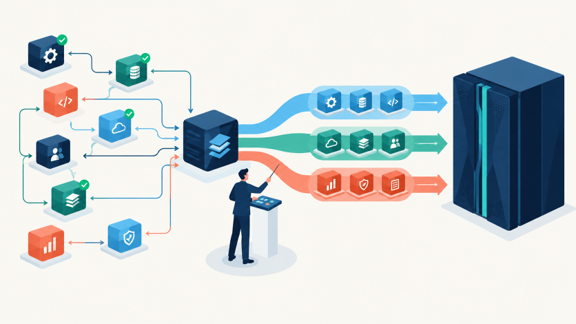
A key addition to IBM Wazi Deploy 4.0 is IBM Release Orchestrator for Z. Think of it as the conductor: individual application deployments still have their parts to play, but someone needs to keep the whole performance in sync.
It enables teams to schedule, coordinate, and automate complex z/OS deployments across multiple applications. Rather than treating every deployment as a separate event, it brings the release into focus.
Deployment teams can coordinate applications across release groups, targets, and phases, define deployment workflows, and monitor execution through a single web interface. Integration with IBM Wazi Deploy connects planning and approval with deployment execution. Preparing a deployment and approving it to run are separate steps.
Not Every Application Can Go Solo
Independent deployments are a great goal. But tightly connected applications don’t become independent just because the delivery pipeline has been modernized.
A change in one application may require a corresponding change in another. Deployment order matters. So does timing. Automating each deployment is useful; coordinating them is essential.
The same applies to vibe coding on the mainframe: however a change is written, it still has dependencies, tests, and a release process to get through. Generating code does not settle the question of what needs to ship with it.
The answer is orchestration, not crossed fingers.
DBB 4: Dependencies Don’t Stop at the Application Boundary
Release coordination is only half the story. Before deploying a change, teams also need to understand what it affects.
DBB V4.0.0 introduces cross-application dependency support in zBuilder, helping bring that wider context into the build process. Applications across multiple Git repositories can publish and import versioned build packages, and impact analysis can identify programs affected by changes to imported dependencies.
DBB 4 also adds Java 25 support and a new dbb validate command for checking the DBB installation and user environment on z/OS.
Cross-application dependency support is particularly relevant here: a build process focused on one application and a release process spanning several applications need a shared understanding of those connections.
Together, DBB 4 and Release Orchestrator address two closely related questions: “What else does this change affect?” and “How do we release these changes together?”
Bring CROZ into the Ensemble
New tooling opens possibilities. Making it work for your applications, teams, and delivery processes is where the real work begins.
CROZ can help you adopt IBM DBB and IBM Wazi Deploy, integrate them into your zDevOps workflows, and put these new capabilities to practical use. Whether you are starting a modernization journey or improving an existing toolchain, our mainframe team can help connect dependency-aware builds with coordinated releases.
For a practical look at the wider toolchain, read DevOps for Mainframe: From COBOL Chaos to Reliable CI/CD.
Your applications already work together. Let’s make sure your delivery tooling does, too.

Falls Sie Fragen haben, sind wir nur einen Klick entfernt.