Most enterprises now have AI pilots. The hard part is moving from experimentation to governed production - without creating new risk. Legacy systems hold decades of business logic no one fully understands. Operations depend on expert judgment that cannot be automated away. Knowledge sits in documents agents cannot reach. And every time AI touches something that matters, security, compliance, legal, and finance need evidence it happened within policy.
We solved this inside CROZ first. The building blocks we built for our own delivery and operations are now available to clients as reusable accelerators - running on Carbon.core, our AI governance platform.
Know what your legacy systems actually do - before you touch them.
Modernization fails when teams rewrite what they do not fully understand. Carbon.modernize reads the existing system - COBOL, PL/I, JCL, mainframe, Java - and rebuilds the knowledge lost over decades of staff turnover and undocumented change. Every output is file-backed, Git-versioned, and reviewable by your architects before anyone commits to a rewrite.


Modernization fails when teams rewrite what they do not fully understand. Carbon.modernize changes the starting point: it reads the existing system - COBOL, PL/I, JCL, mainframe, and Java - and rebuilds the knowledge lost over decades of staff turnover, undocumented change, and tribal memory. It combines static analysis with AI reasoning and human context, all file-backed and Git-versioned, so every output is reviewable, reusable, and traceable. The result is a shared map of business objects, dependencies, data structures, and requirements a modernization team can actually trust - and an audit trail of what was understood before the rewrite began.


A control plane that makes AI agents enterprise-safe.
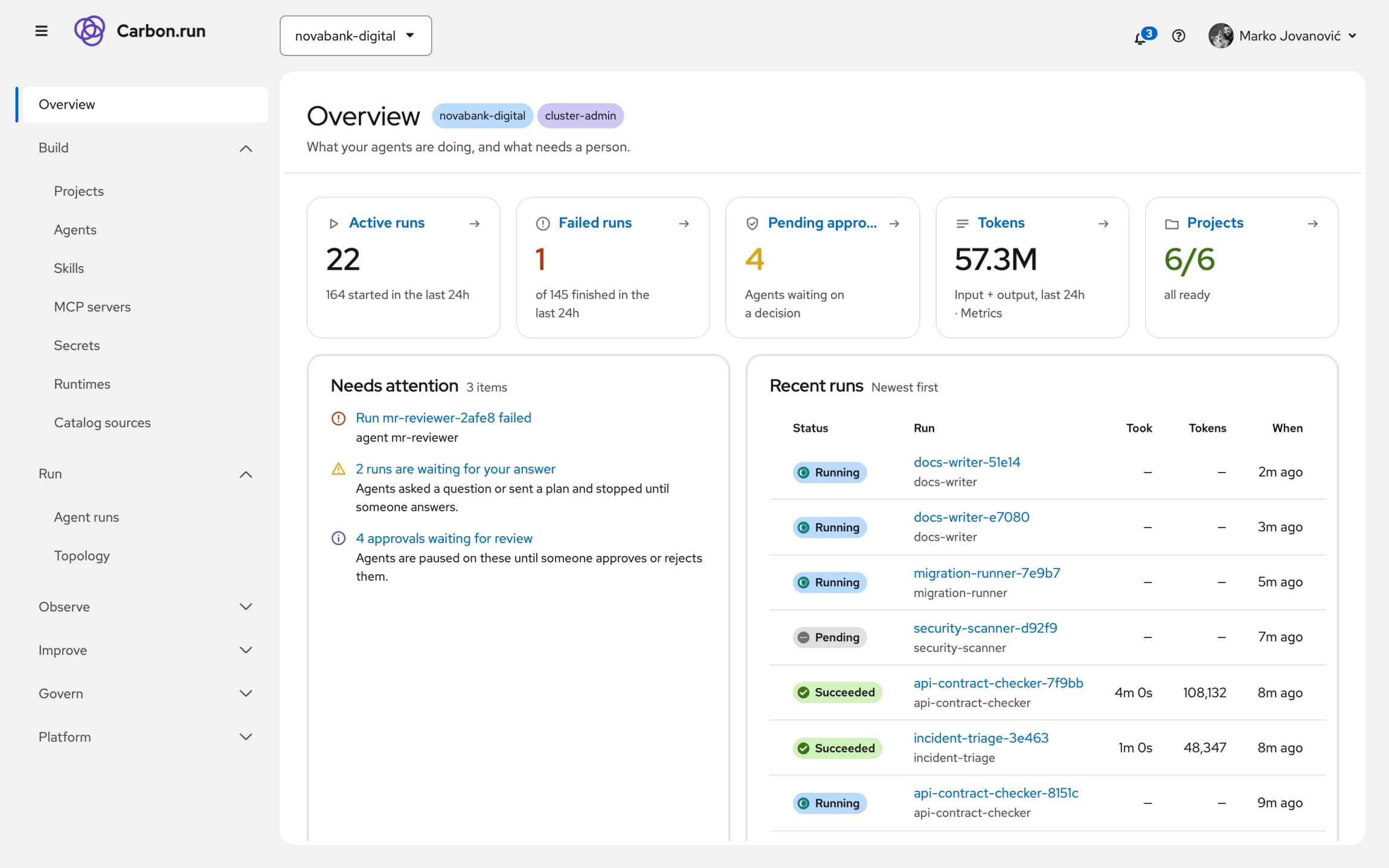
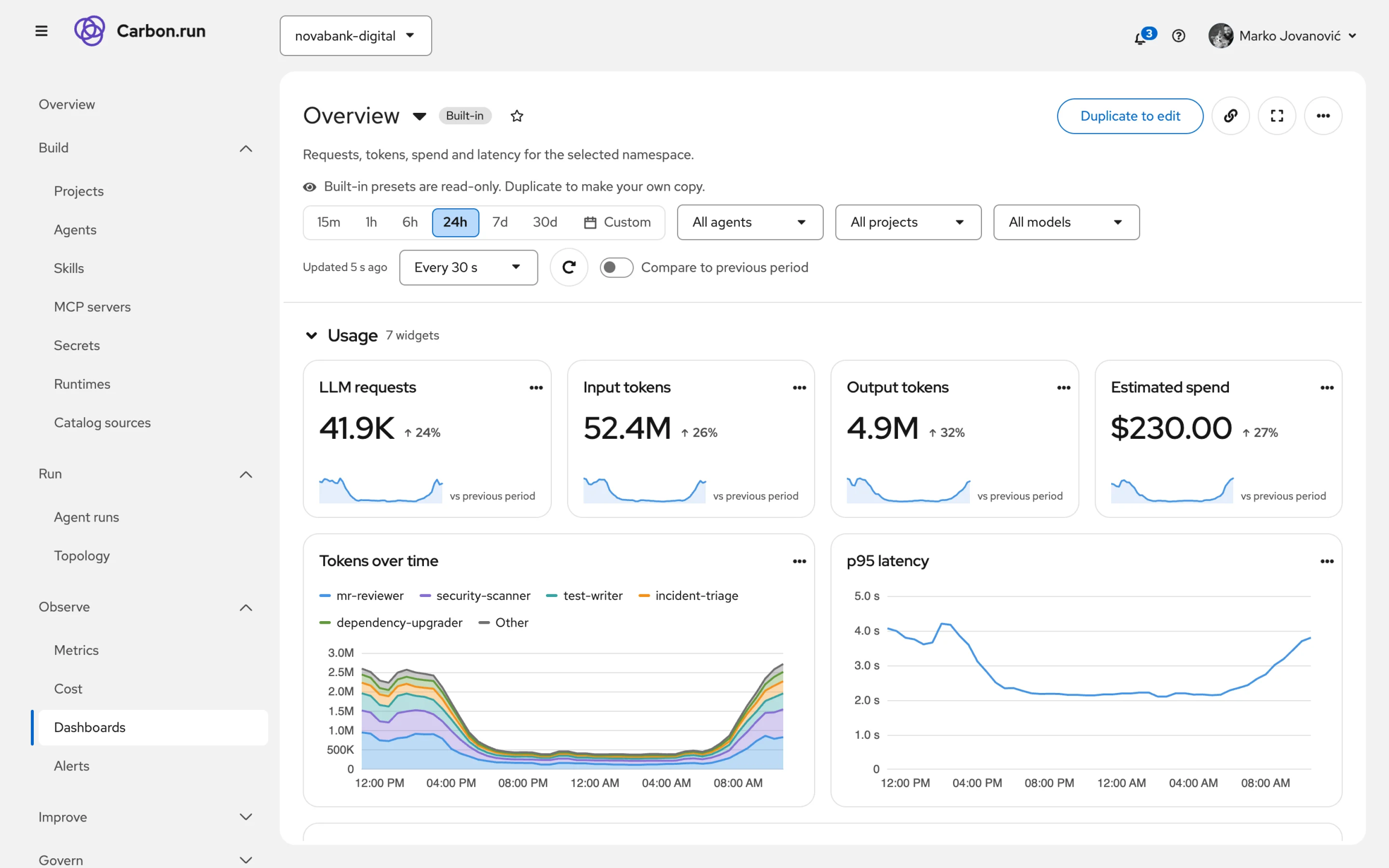
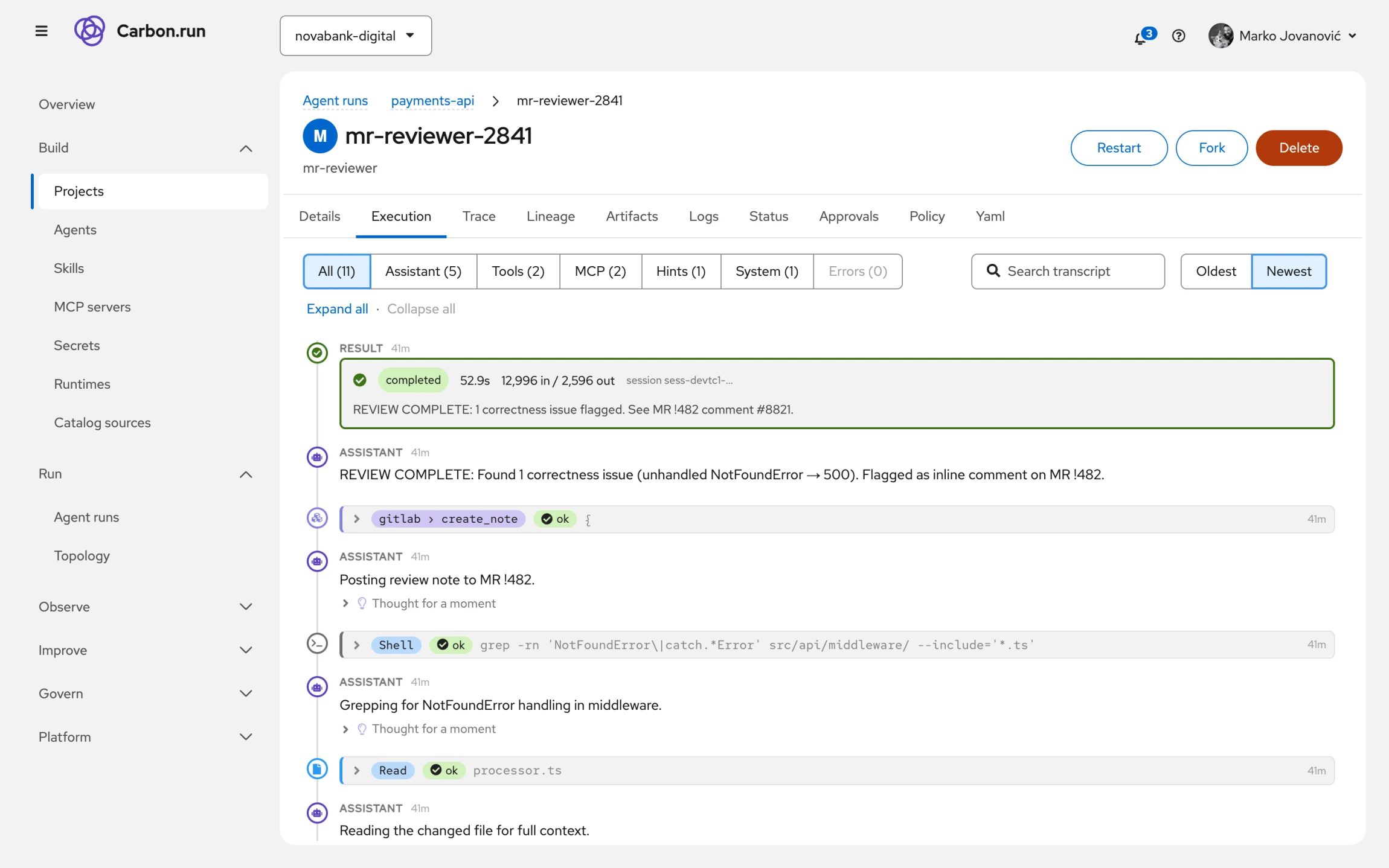
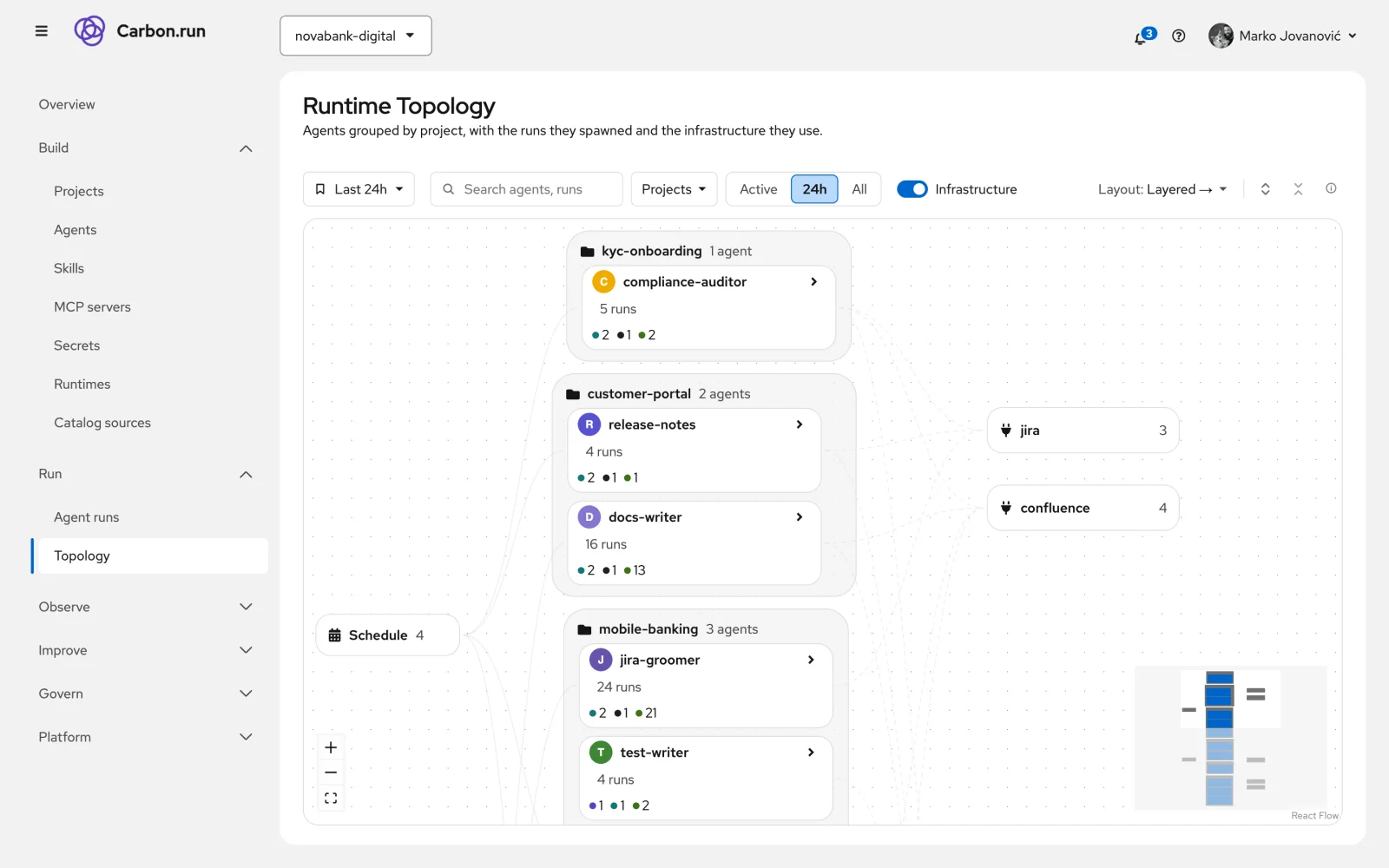
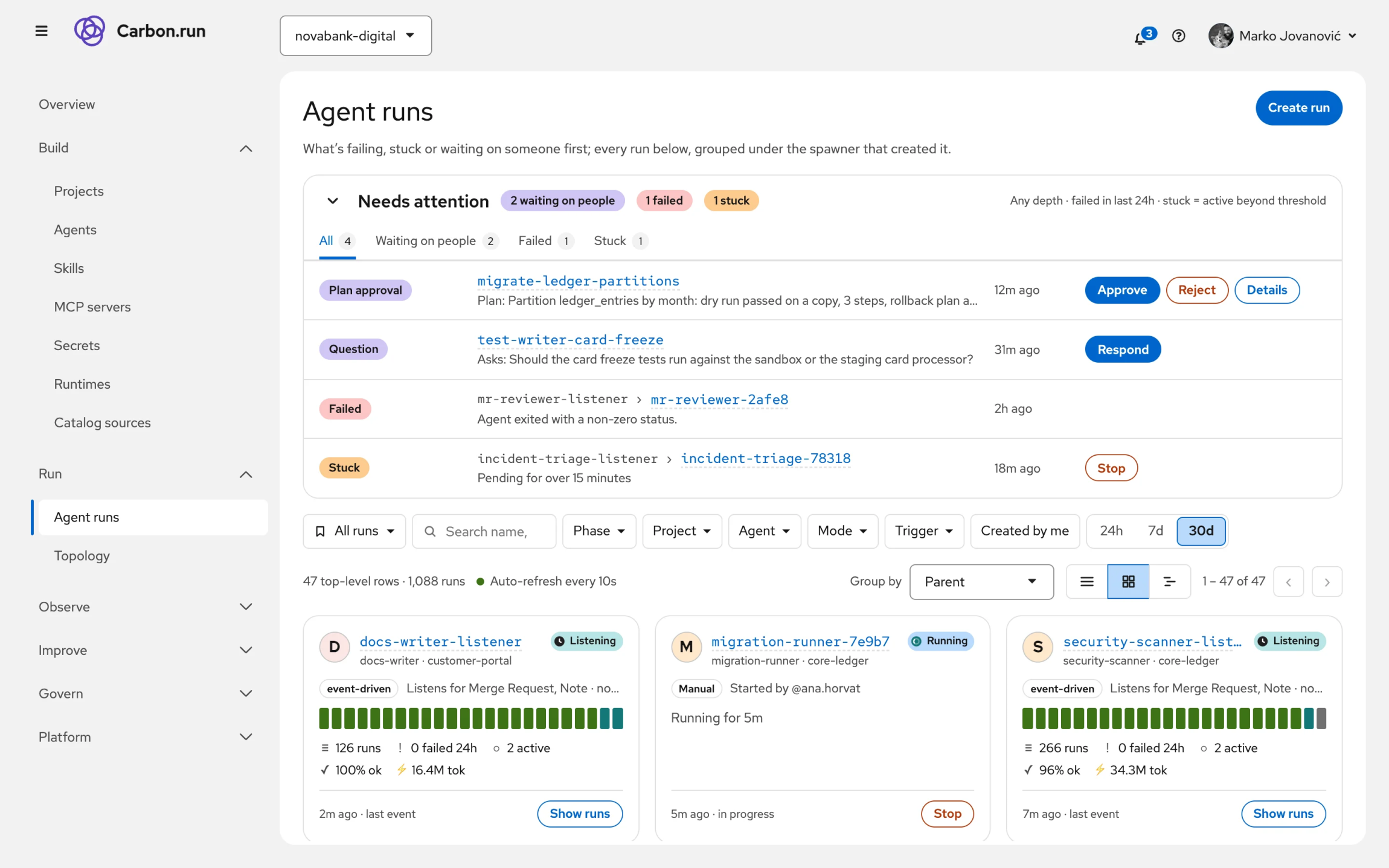
Agents that can run unchecked are a governance liability. Carbon.run gives every agent a bounded, auditable place to operate: Kubernetes-native, with scoped tool access, real human approval gates, per-team cost budgets, and a full audit trail your SIEM already understands.
We come from DevOps and platform engineering, where we love an ordered world: source in Git, CI/CD, apps in their security context, observable and cost-tracked. Then agents arrived and broke that order - what is their source, where do they run, what can they touch, how do you stop a runaway loop? Carbon.run is our answer: agents become first-class, governed citizens alongside apps. Operator-managed and Kubernetes-native, designed to run on infrastructure you already control - OpenShift and other Kubernetes distributions. Every run is a first-class record your security and compliance teams can audit.
Read the full story by Ivan Krnić →AIOps with a human sign-off at every decision point.
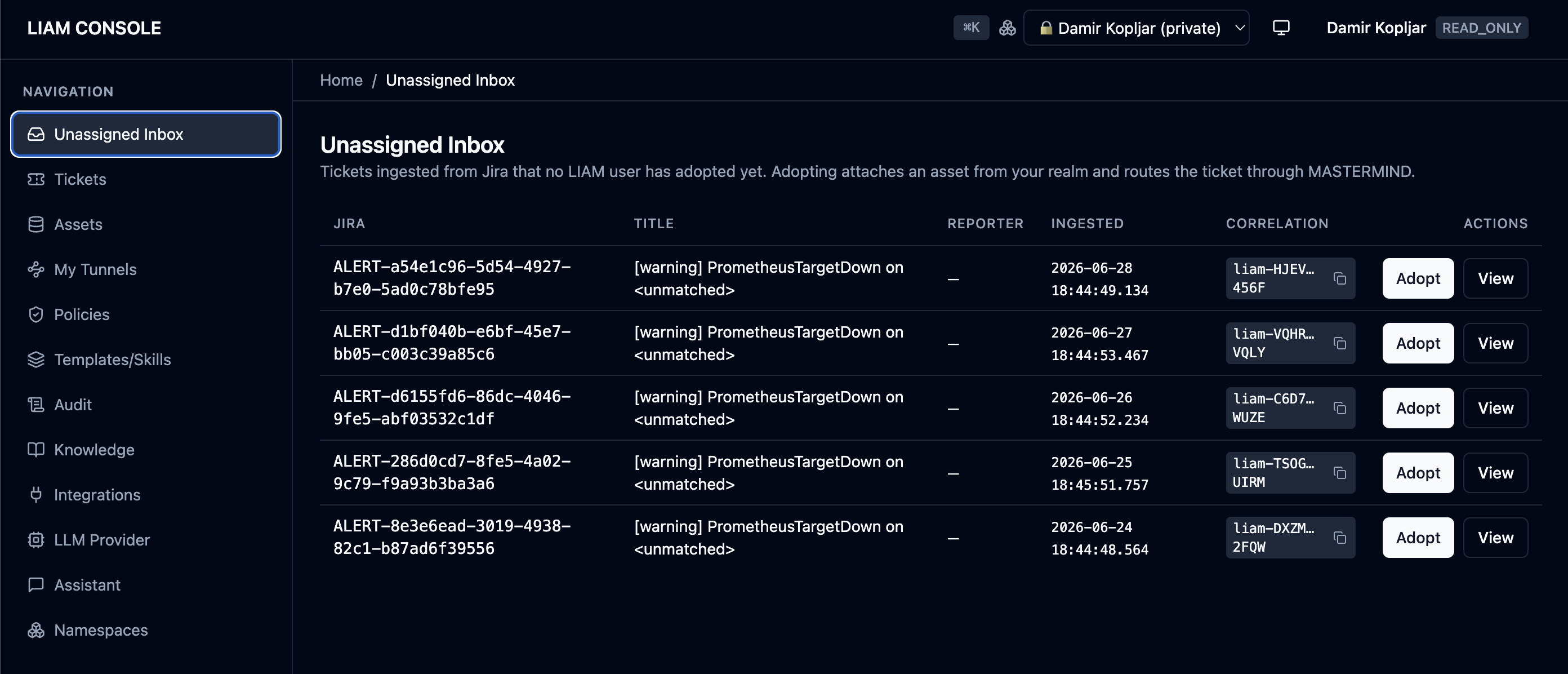
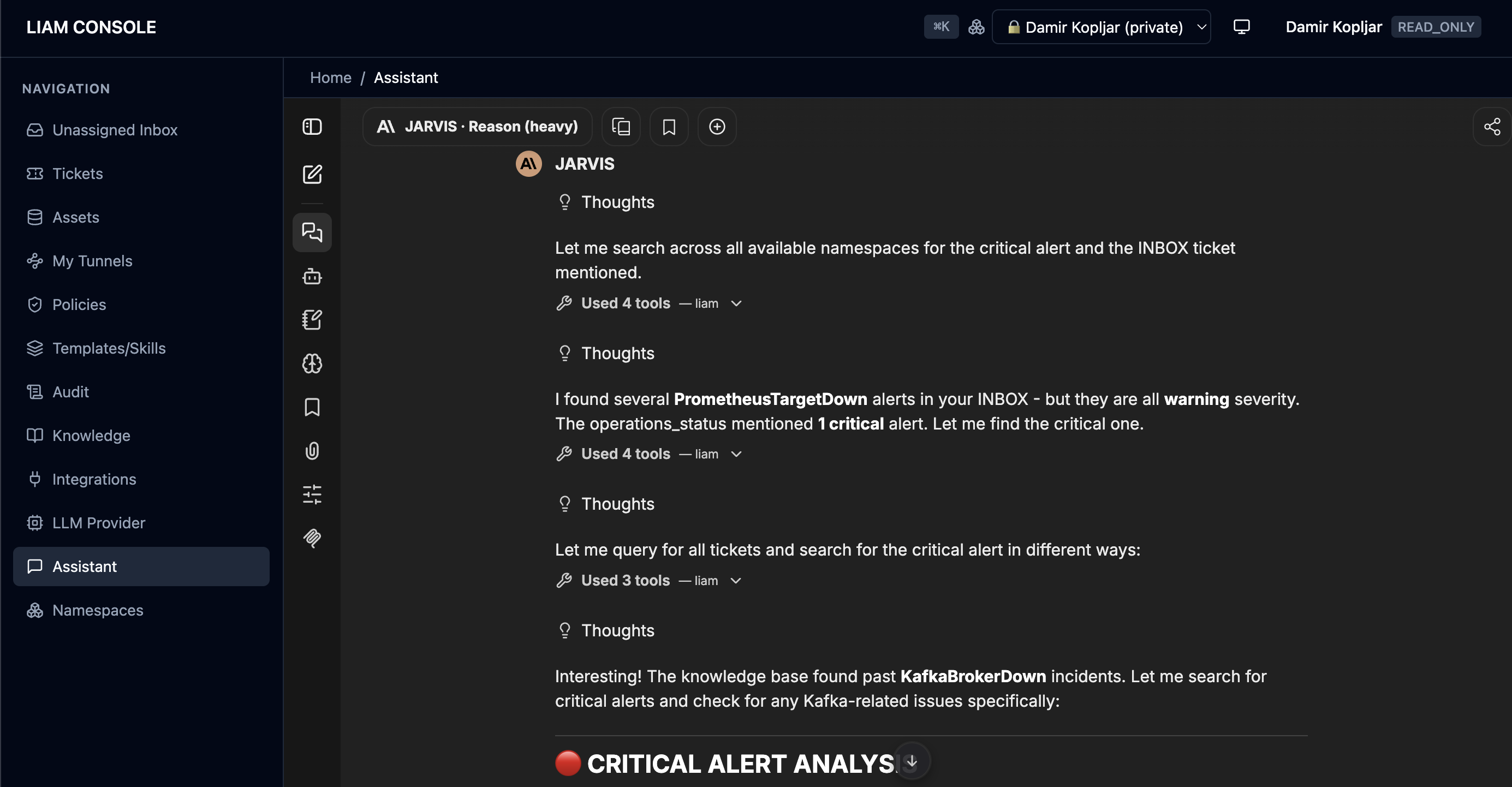
Automation handles the planned work. The hard part is the unplanned - the incident no runbook anticipated. Carbon.operate investigates tickets and alerts, reasons over your live infrastructure, and proposes safe fixes. Nothing executes without a human approving it first. Every change is a reviewable pull request.


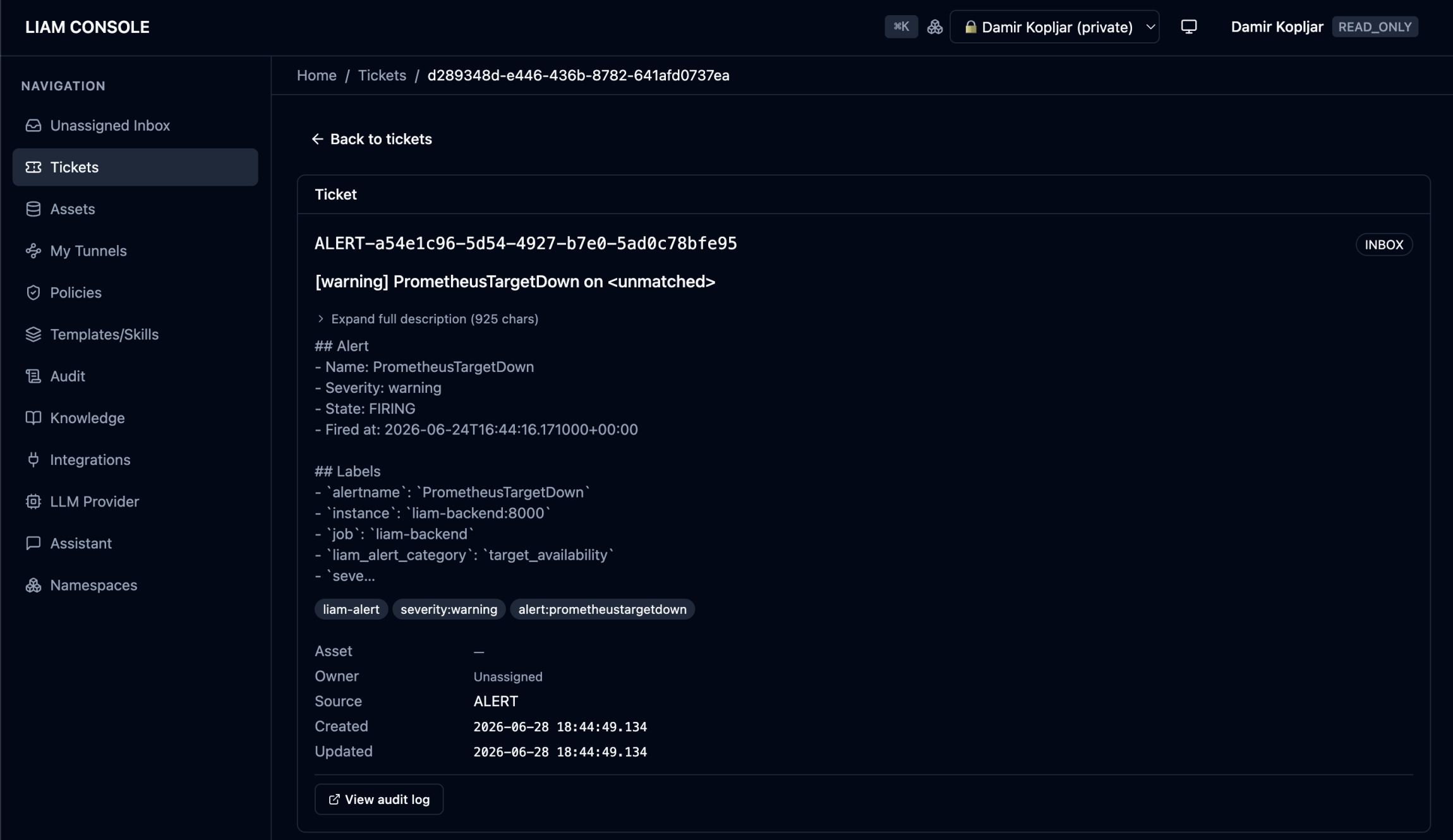
The hard part of operations is the unplanned - the 3 a.m. incident no runbook anticipated. Carbon.operate is built for exactly that. It ingests tickets and alerts, reasons over your live infrastructure, and works the problem the way a senior engineer would: investigate, form a hypothesis, propose a fix. It never acts on its own - proposed changes are drafted as reviewable pull requests and execute only after a human approves. A policy judge and a deterministic rule engine constrain every possible action before it reaches a human, and what worked is remembered for next time. Your team gets AI-powered investigation with zero ambiguity about who approved what.


Give your agents your rules, your standards, your documents.
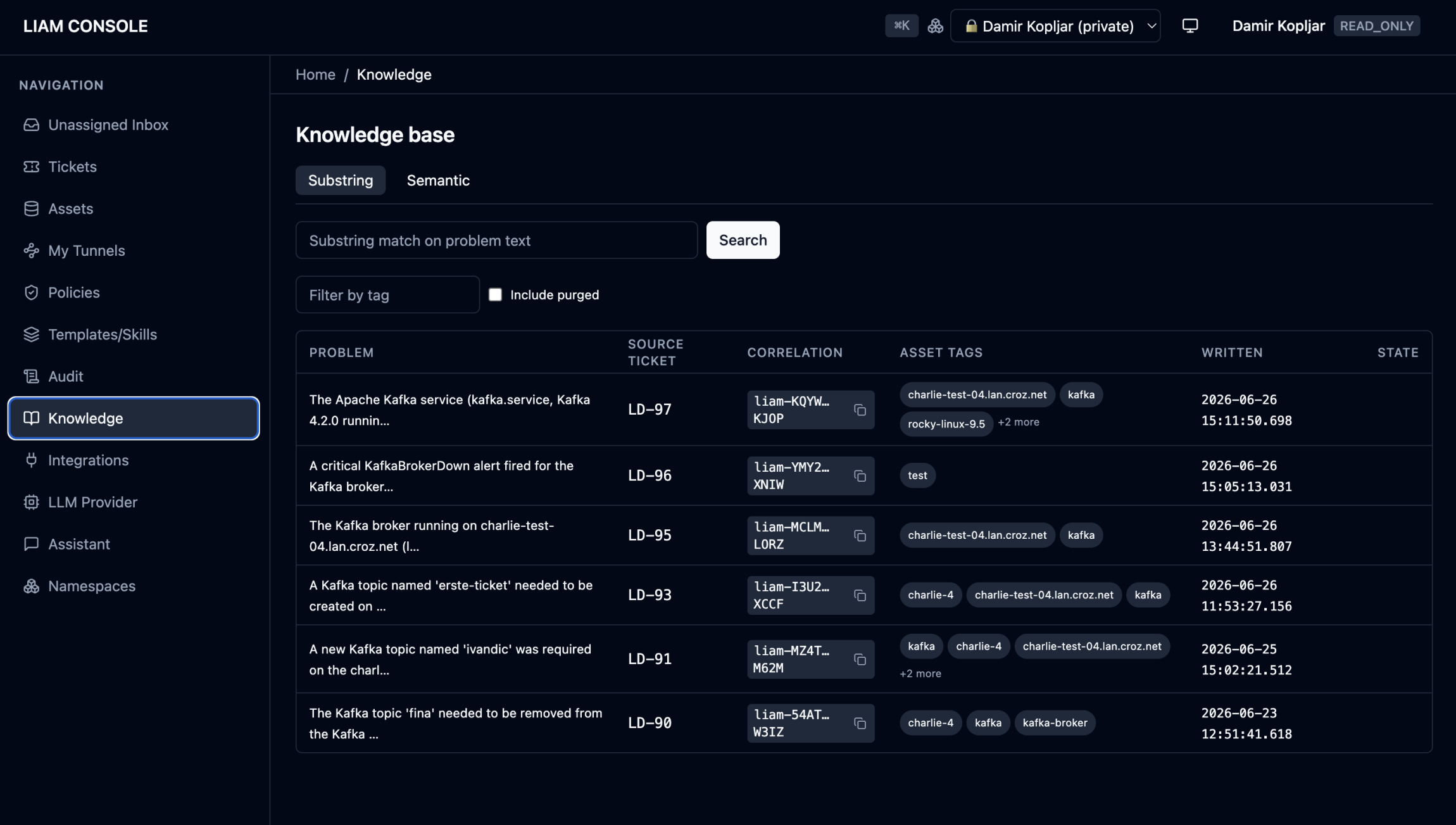
Enterprise knowledge that agents can actually use - with citations so outputs are verifiable, and validation so new documents meet your own standards before they leave the team. Deployed per customer, so sensitive content never leaves your perimeter.
Carbon.know adapts to how much structure you already have. Point it at everything and it becomes a general assistant - an HR assistant that knows every company policy, for example. Or scope it to a single department where SOPs, procedures, and best practices are defined, and it works to those rules. Deployed per customer with per-client configuration, so sensitive content never leaves your perimeter. We battle-tested it in our own sales team: every proposal we have written is ingested, each new proposal is validated against our best practices, and drafts are generated from our own template and brand guidelines.
Carbon.core is CROZ's own AI platform and the foundation under every building block. It enforces policy, tracks adoption and cost, provides full tracing across every agent and run, and gives your organization the choice to run frontier cloud models, self-hosted models, or both - without building this governance infrastructure from scratch.
One workflow. One team. One measurable outcome. Four to six weeks. Everything instrumented, human-approved at every step - before you commit to anything larger.