

Dear fellow mainframer,
As preparations for the Mighty Mainframe Conference accelerate, the conversation naturally centers on mainframe modernization.
In recent discussions, Martin Pluschke, Head of IT at NÜRNBERGER Versicherung, highlighted the challenge of translating business needs into meaningful technical architecture, particularly as AI-driven change and data center sovereignty continue to reshape long-term strategy.
Mark Wilson, Technical Director at Vertali, puts it simply: “Security must come before transformation.” Whether integrating new AI agents with legacy mainframe environments or rethinking hybrid architectures, he emphasizes that modernizing without first strengthening your security posture can increase exposure, expand attack surfaces, and accelerate risk.
From the project trenches, Henri Kuiper, CTO and Co‑Founder of Mainframe Society, and Joseph Westman bring decades of modernization experience across both technical and operational domains. They’ll explore why modernization is never “just one software update,” how technical constraints intersect with organizational expectations, and why parts of any organization often prefer traditional setups. Their sessions promise a balanced look at what truly drives or slows mainframe evolution.
Finally, you won’t want to miss Nassim Nicholas Taleb’s keynote at QED, offering a thought‑provoking exploration of risk, stability, and long‑term thinking—topics the mainframe community knows intimately.
Anthrophic vs. COBOL
Anthropic published the blog. IBM’s stock fell sharply right after. You already know the story – don’t you? (see the links in the Industry Insights below)
This isn’t another post about market swings or investor psychology. Was the IBM selloff an overreaction? Yeah… probably.
Or why most of the comments are just recycling the same old story. Claude Code — and many other LLMs — have been perfectly capable of digesting COBOL for quite a while. And yes, COBOL still runs most of the ATMs out there. Nothing new there.
Finally, the Anthropic blog talks about understanding (or even migrating?) COBOL programs. But the mainframe world is really about performance, stability, security, and robustness. COBOL is only one small piece of that much bigger picture.
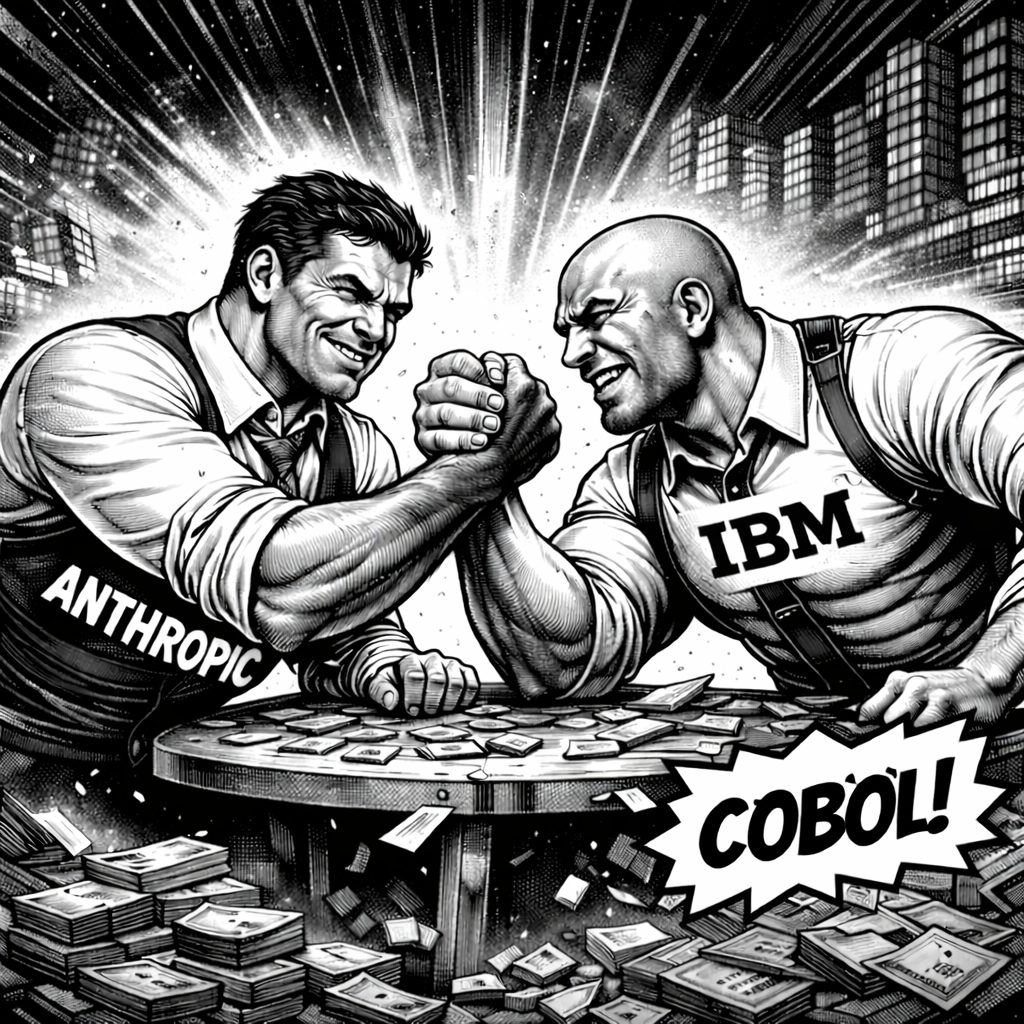
I found myself wondering why Anthropic decided to publish that story in the first place. Especially considering that IBM and Anthropic announced a strategic partnership only a few months ago (with Claude models becoming available in Project Bob as the most visible outcome). At first, it didn’t seem to make much sense to “attack” a partner that focuses on such a specific niche while you position yourself as more of a generalist. And honestly, I don’t believe Anthropic would intentionally do anything that might jeopardize the mainframe business.
Then I figured maybe it was just a slip-up by Anthropic’s media team — they’re competing with OpenAI, Google, and others, so they want to showcase their broad capabilities. Maybe they simply forgot about the IBM partnership in the rush.
Or perhaps, it’s just a bit of friendly fire within the world of coopetition?
At CROZ, we’re generally very happy with Anthropic’s Claude (more in this post: https://croz.net/ai-agents-are-moving-us-from-coding-to-architecting/). However, we also recognise that the mainframe ecosystem is extremely complex. Modernizing it isn’t just about the tech—it’s about who is doing it and how. And while AI can definitely help, we don’t believe that pure code translation is the silver bullet.
WCA4Z 2.8.x: Laying the Groundwork for Project Bob
watsonx Code Assistant for Z (WCA4Z) Version 2.8.x feels like IBM’s last substantial step before Project Bob, and it is far more than just another ”agentic wrapper”. At its core is Z Understand, a metadata layer that maps dependencies and runs impact analysis across applications, even beyond the current workspace. That structured context then feeds a multi‑agent flow that guides refactoring and code generation without cramming the entire codebase into a single model context.
Z Code Scan adds a practical governance layer by embedding enterprise coding standards into both findings and generated code. The key question remains reliability in real production environments, but the multi-model setup, with Mistral handling agentic workflows and Granite used elsewhere, reflects a pragmatic approach. For a detailed technical breakdown and a critical assessment of what this means ahead of Project Bob, read Philipp Kremling’s blog here.
Industry insights
This is the original blog from Anthropic that kicked off the whole avalanche:
https://claude.com/blog/how-ai-helps-break-cost-barrier-cobol-modernization
And here’s the official response from Rob Thomas, Senior Vice President, IBM Software and Chief Commercial Officer:
https://newsroom.ibm.com/blog-lost-in-translation-what-the-ai-code-debate-keeps-getting-wrong
There are tons of blogs and media articles popping up, plus people posting on LinkedIn and other social networks. Interesting times