Don’t worry, this title started as a deliberate provocation, courtesy of Andrey Mitrev (IBM) and Leendert Blondeel (Hogent University) during their zSkills session at Mighty Mainframe Conference ’26. A conference spent two days doing exactly the opposite: showing how modern the mainframe can be once you stop treating it like a museum artifact and start recognizing it for what it really is a high-performance platform shaped by decades of real-world production experience.
Modernization Isn’t a Project. It’s a Set of Decisions.
The term “mainframe modernization” has been stretched so far that it risks losing its meaning. Depending on who you ask, it can describe anything from moving workloads to the cloud to rewriting existing applications. Too often, the discussion stays confined to legacy technologies such as IMS, COBOL, and CICS, and what should be done with them.
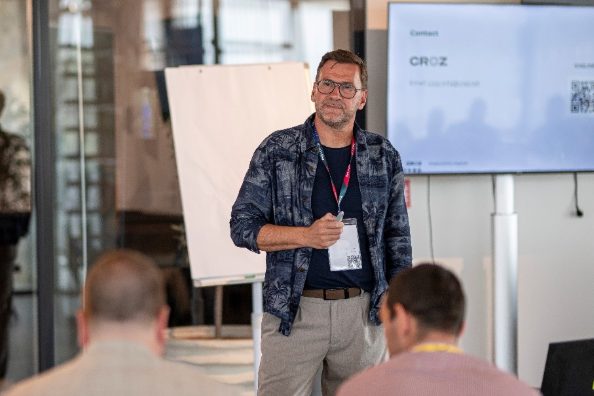
Armin Kramer, Head of Mainframe at CROZ and conference host, set the tone with his opening talk, “15 (+1) Ways to Reinvent Mainframe Modernization.” He moved the conversation away from “upgrading” toward intentional evolution. Instead of treating modernization as a one-off project, he framed it as a coordinated effort across architecture, skills, processes, tooling, governance, and security. The “+1” drives it home: people and mindset are the real enablers.
That insight carried through the entire conference: modernization is not about replacing the old with something new. It is about aligning everything you do with where you want to go.
Megaliths, Monoliths, and Craftsmanship. Hmmmm
Joseph Westman draws a powerful analogy between mainframes and ancient megaliths: enduring systems built to last, maintained by skilled practitioners, and continuously extended because they still deliver value. What first seems abstract quickly becomes clear systems that survive for decades do so by design, not accident. The real lesson is not replacement, but evolution: integrating, adapting, and improving what already works. This requires craftsmanship.
Complementing this view, Henri Kuiper challenges modernization efforts with essential questions: What are we really modernizing? Are we solving real problems or perceived ones? Are we improving technology or merely changing it? Henri embraced the “hmmm” and turned it into a framework for better conversations. And the crucial lesson: keep a close eye on which train you’re on a constant speed can easily be mistaken for standing still
zDevOps: Familiar Practices, Different Platform
Amra Mulisic and Louise Wahlberg from Handelsbanken shared their zDevOps journey. The focus was on reliability, repeatability, and making development workflows genuinely useful for teams delivering change. They demonstrated how modern development practices can work seamlessly with COBOL-based systems. The key takeaway was simple but powerful: “modern” is not defined by the programming language you use, but by the way you design your processes.
Security as a Starting Point
Mark Wilson from Vertali brought the focus to a “Security First” perspective. Although the mainframe is often considered a highly secure platform, Mark emphasized that it is more accurately described as “highly securable.” Especially in the age of AI, security is not something you add later; it is something you design for from the start.
Project Polaris and What Comes Next
Fiona King and Tim Reiser from IBM offered a preview of Project Polaris. There was a clear sense of curiosity and anticipation, without the need for excessive hype.
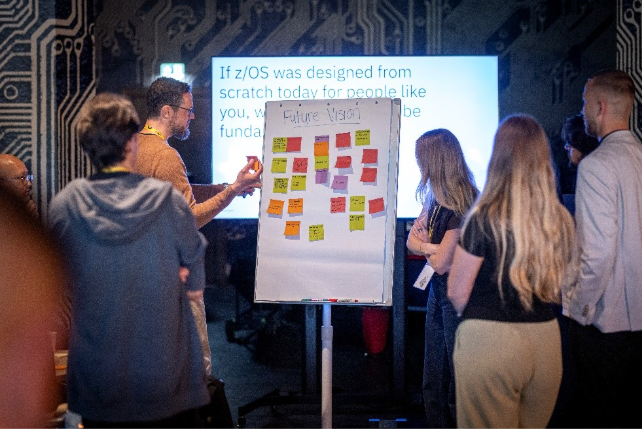
What stood out was not just the technology itself, but the credibility of the direction being presented. Polaris felt like a roadmap the community could engage with something concrete rather than conceptual.
A quieter but highly significant theme was the growing adoption of Infrastructure as Code on z/OS. We saw YAML-based configurations for system definitions, managed through Git, combined with JSON schema validation to catch issues early.
AI on Z: Practical Application Over Hype
AI was present throughout the conference. Instead of being treated as a standalone capability, it was integrated into real-world scenarios.
We saw a pre-release demo of IBM Bob Premium Package for Z, a flagship platform from IBM that now supports mainframe. It looks very, very promising.
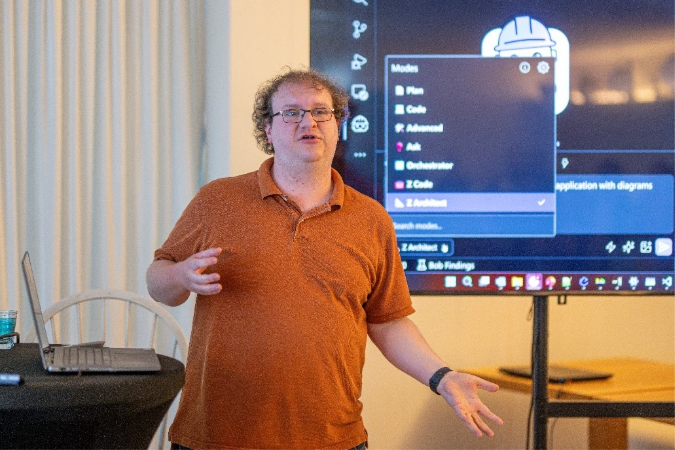
On the operational side, demonstrations showed agentic AI assisting workflows through familiar tools like Bob CLI. The emphasis remained clear: AI can assist, but control and responsibility remain firmly with the engineers.
The diversity of approaches presented by Philipp Kremling from CROZ, Tim McKeoun and Max Rautland from IBM reinforced an important point: there is no single “AI solution” on Z. What is emerging is a flexible ecosystem of patterns and practices.
Stability as a Competitive Advantage
Martin Pluschke from Nürnberger Insurance highlighted a perspective that often gets overlooked in modernization discussions: stability still matters. Mainframes provide a level of reliability that allows critical applications to run for decades. This longevity translates directly into return on investment. Interestingly, while mainframe costs are often closely monitored and well understood, the total cost of distributed environments is much harder to quantify.
AI Won’t Lead Change, People Will
Mirko Minnich (BETA Systems), Rosalind Radcliffe (IBM) and Armin Kramer (CROZ) closed the conference with the panel discussion. One of the most insightful moments from discussion was the reminder that AI cannot lead change. It can accelerate work, reduce repetitive tasks, and help explore solutions more efficiently, but it does not replace human judgment, experience, or accountability. Adoption is the key point: it is as much a cultural challenge as it is a technical one
The Real Conference: Between the Sessions
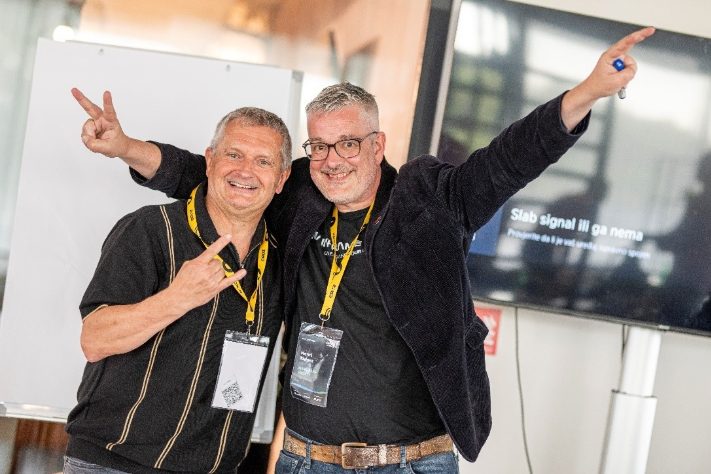
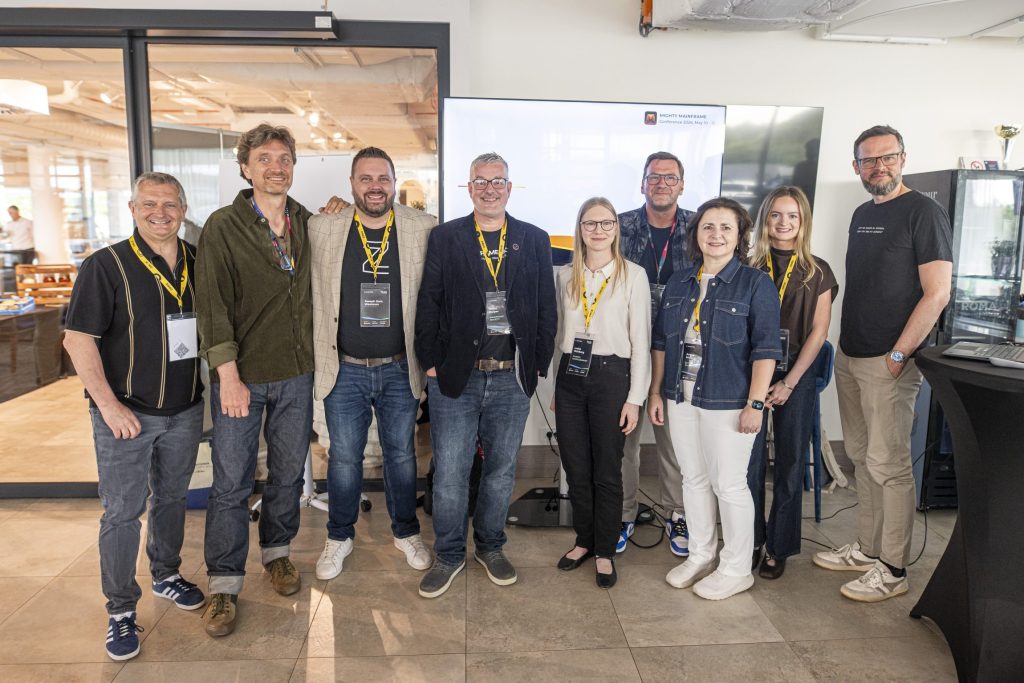
As strong as the formal sessions were, some of the most valuable moments happened outside them. Sharing the space with the QED conference brought its signature openness and friendly atmosphere, which Mighty Mainframe clearly inherited.
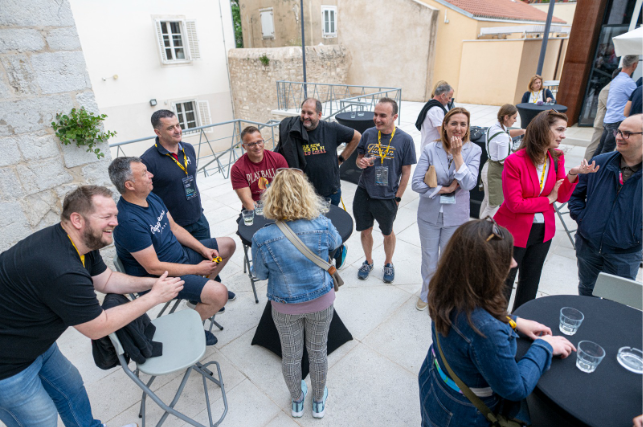
The informal conversations on the terrace opened the door to genuine exchanges; these interactions ranged from quick problem-solving chats to honest reflections on modernization challenges, along with some great spontaneous mentorship moments. If you want to catch the full atmosphere from Mighty Mainframe Conference 2026, you can browse the complete photo gallery here.
The community felt it too. A few reflections shared after the conference captured exactly what made this year’s atmosphere so special:
“Another year of #MightyMainframe Conference, and once again it exceeded expectations. Great lineup, great topics, and most importantly, great people.”
Želimir Brkljac
IBM
“The energy was something special, a beautifully organised event with a lineup of topics that actually made you think.”
Renata Devcic
Nexi Croatia
Final Verdict
So, is mainframe boring and old?
Only if you choose to ignore everything happening around it.
What we saw in Zadar was not reinvention for its own sake, but a steady, layered evolution across skills, tooling, processes, security models, and AI-assisted workflows.
The conclusion is stronger than the original provocation:
Mainframe is experienced, and it is rapidly evolving.
And if this year’s conference is any indication, next year’s “Save the Date” already feels too far away. 😊